In addition to leading design for my own product team, I been providing UX support for a high-profile, cross-product strategic initiative since about October 2024 - a role I continue to hold. This project is scheduled to launch and will be showcased by the Senior Vice President at HubSpot’s global company event, INBOUND, in San Francisco in September 2025.
This new tool 'Personalisation' empowers the Marketer to reach the right audience with segmentation and create the right content through personalisation. From the marketers perspective, it is not only an opportunity to personalise content for anonymous visitors but understand the size of the opportunity and potential impact of the tailored content using segments.
Broad, generic content shown to all website visitors makes it challenging to meaningfully engage specific audiences. In today’s constantly evolving web environment, a one-size-fits-all messaging approach is no longer effective. This project looked to empower marketers to reach the right audience with segmentation and create the right content through personalisation. From the marketers perspective, it is not only an opportunity to personalise content for anonymous visitors but understand the size of the opportunity and potential impact of the tailored content using segments.
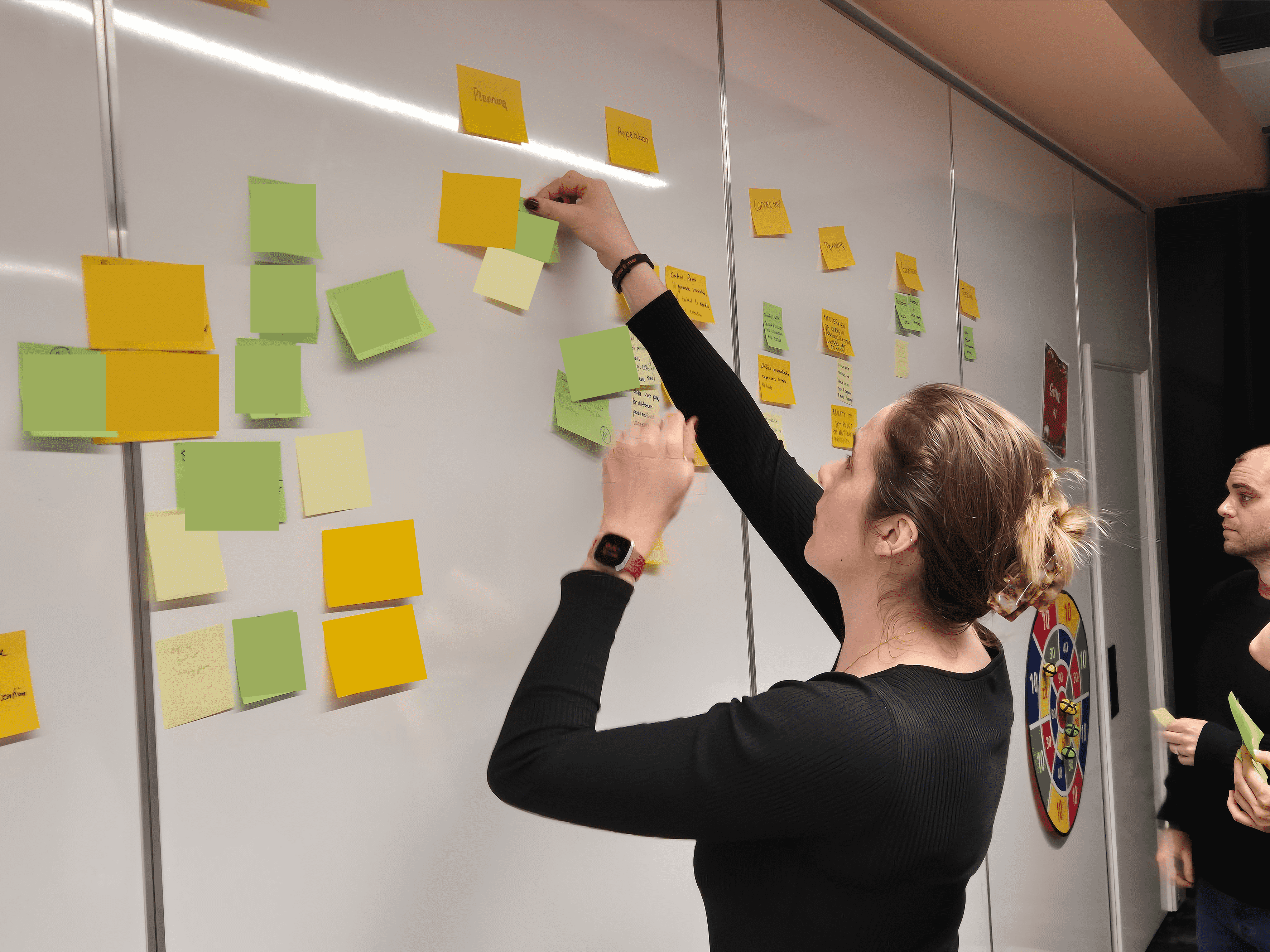
(Image below: Louise in an early-stage concept workshop - whiteboard content has been redacted.)
I designed end-to-end workflows that enabled marketers to create personalised content based on audience segments, without requiring technical expertise. I focused on simplifying complex logic into clear, actionable steps through progressive disclosure, guardrails, and intuitive defaults.
I created wireframes, interactive prototypes, and high-fidelity UI using HubSpot’s design system, while identifying necessary other features to align with. All while collaborating closely with engineers to validate edge cases and ensure accessibility across interfaces.
Throughout the process, I supported UX researchers running concept testing and usability testing sessions to validate assumptions. I was able to iterated based on feedback, refining both the interaction flows and the supporting UI copy for clarity and confidence.
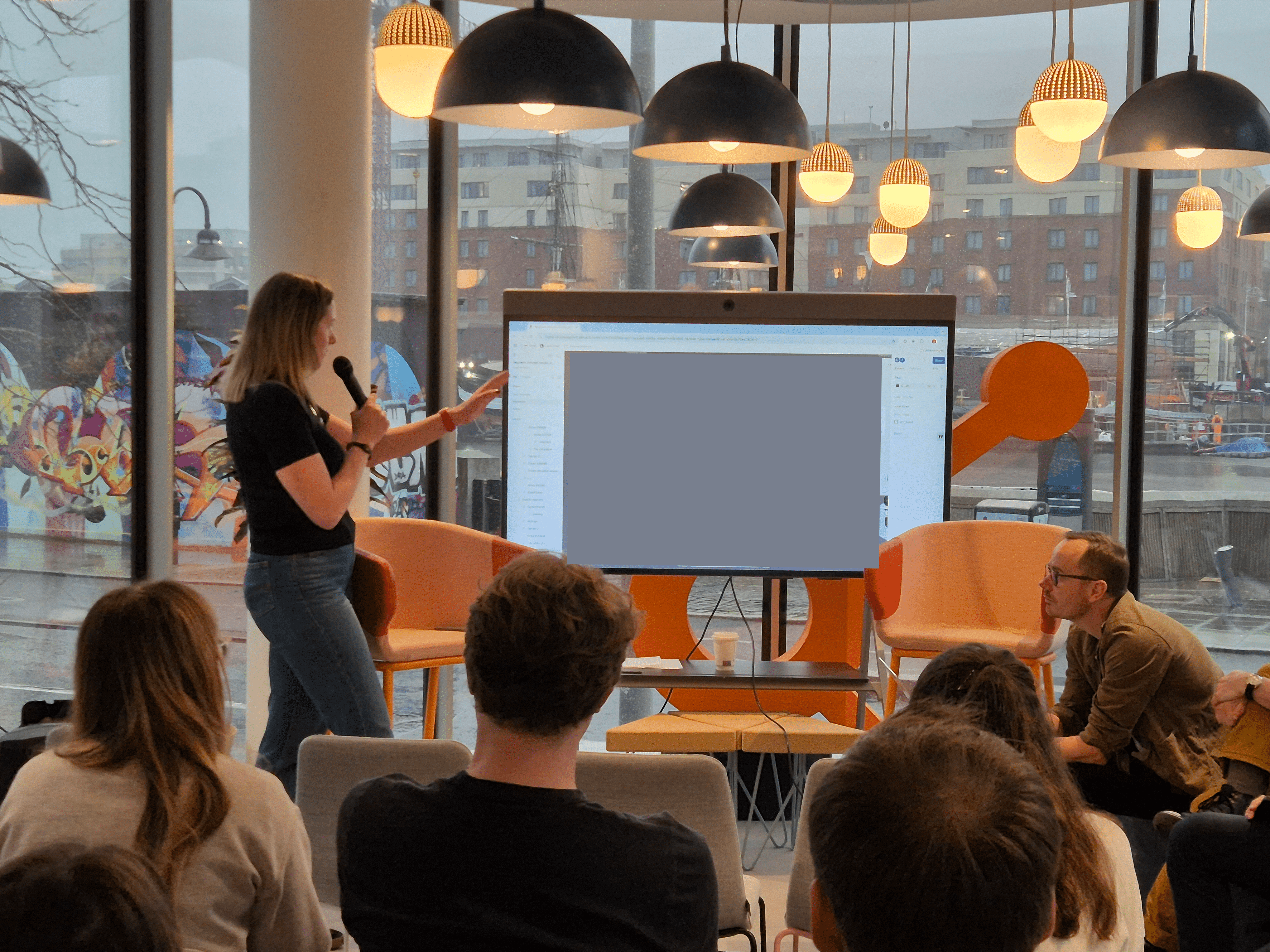
(Image below: Louise presenting the design vision to the team and pillar leadership - monitor information has been redacted.)
This feature is currently in development and is set to launch in September 2025 at HubSpot’s global conference, INBOUND, where it will be presented by the Senior Vice President of Product. Early feedback calls with customers have been positive.
I have been leading Product Design for the Call-to-Action team for around 1.5 years now, a product within the HubSpot Marketing Suite. I collaborate closely with my product partners (including a technical lead, a product manager and engineers) and other product teams to shape and implement a vision that aligns with the business’s goals and objectives.
A CTA (Call-to-Action) is a clickable prompt marketers use to drive visitors toward a specific action, like signing up, downloading, or making a purchase. Examples include pop-ups, sticky banners, slide-ins, embeddable buttons and more.
Creating and styling CTAs in HubSpot was far from intuitive. Marketers often found the process confusing, with multiple setup steps, inconsistent editing flows, and limited styling flexibility. Upon moving to the CTA team, I conducted an in-depth qualitative and quantitative research assessment and identified that marketers often found the process confusing, with multiple setup steps, inconsistent editing flows, and limited styling flexibility.
Improved Template Page
Improved Empty State for first time visitors
Improved and additional templates
The CTA template information architecture and visuals resulted in:
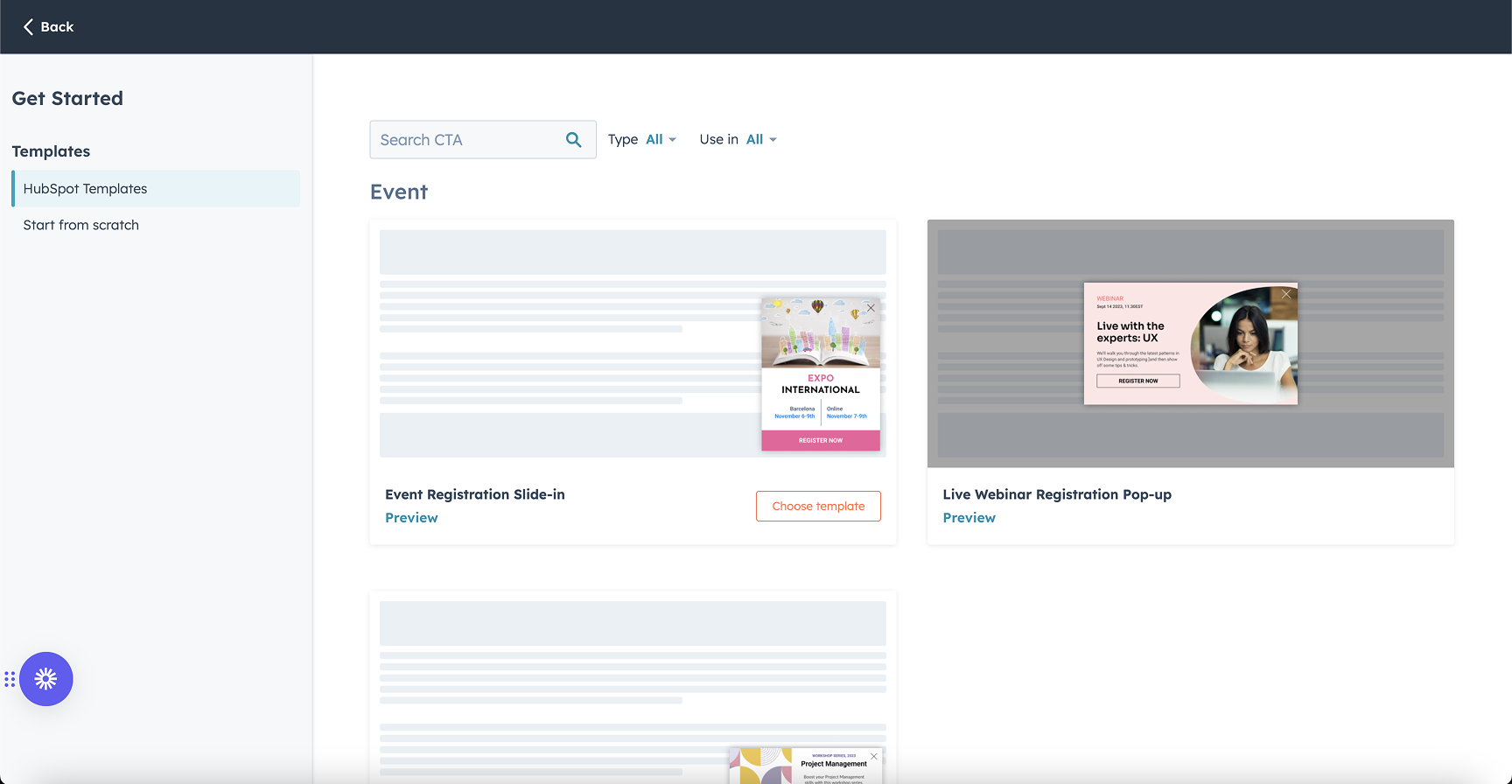
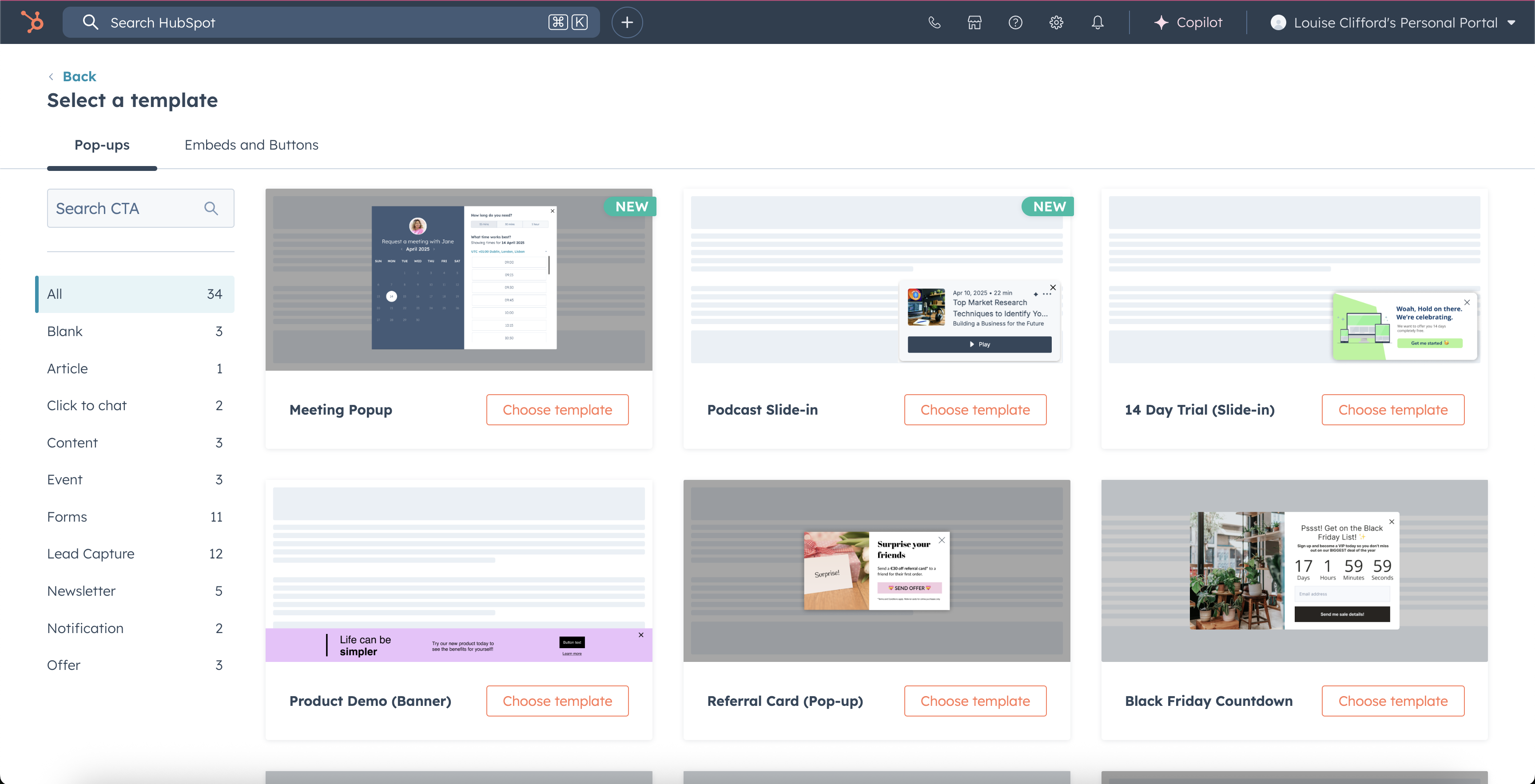
Creating effective CTAs is a time-consuming and often intimidating task for marketers, especially for those without design or copywriting experience. Users are expected to craft compelling, on-brand messaging and visually engaging content from scratch, often without guidance or inspiration. This results in generic CTAs, missed conversion opportunities, and inconsistent quality across marketing assets.
I recognised there is no built-in support to assist users with ideation, content creation, or styling in the CTA product. Users either start from a blank slate or rely on the provided templates, which limits creativity and slows down time-to-value.
I partnered with my team's Technical Lead to explore and map out the AI opportunities. I analysed data from the most popular CTA templates to inform the development of prompt suggestions and examples. These suggestions enhanced user learnability by guiding them on how to effectively prompt the AI.
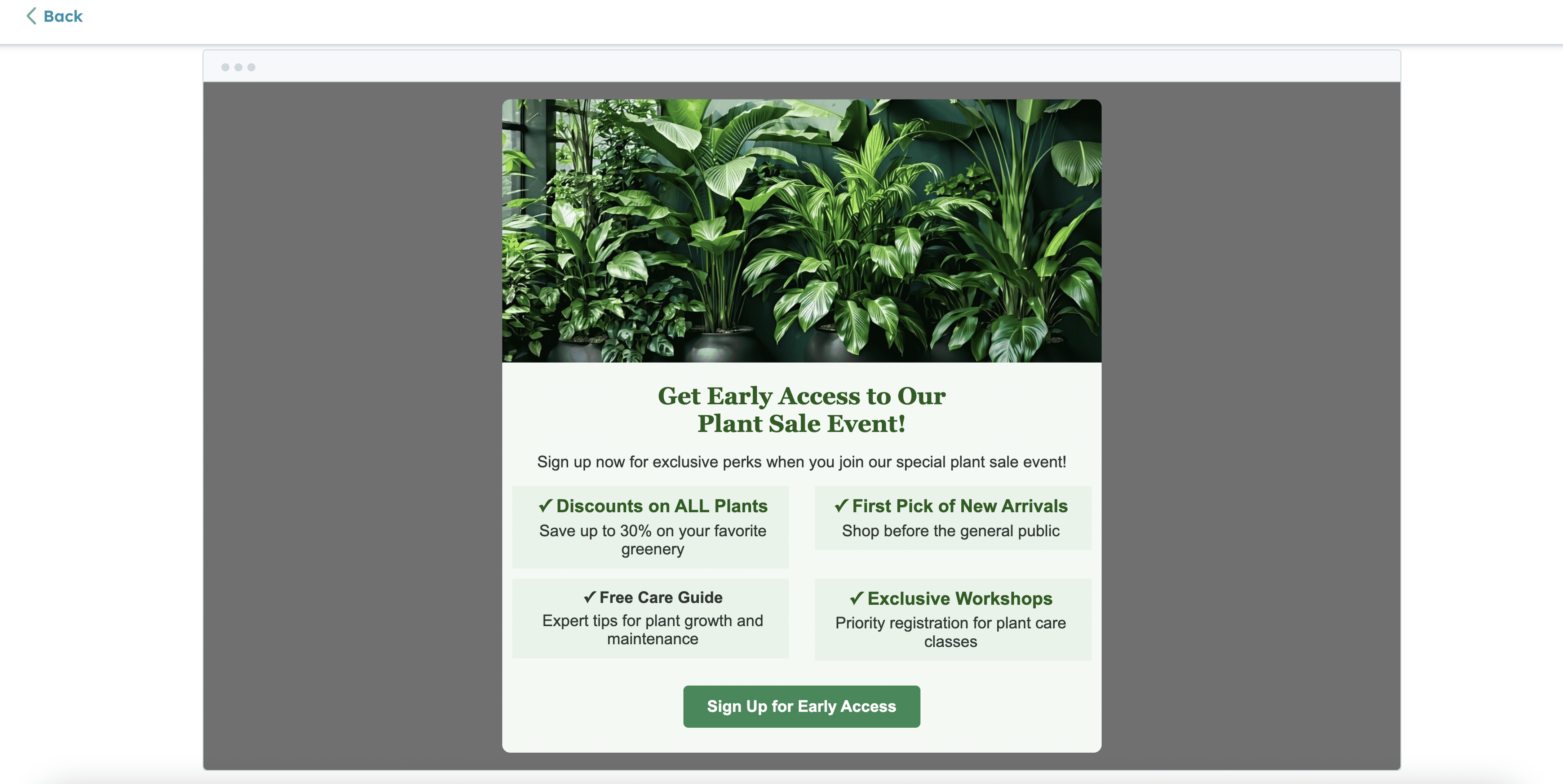
I designed UI patterns that balanced control and automation - giving users the flexibility to edit, regenerate, preview or fine-tune their suggestions. The result was a streamlined experience that empowered users to publish effective CTAs more confidently and efficiently.
This feature is currently in private beta with approximately 1,000 customers and is scheduled for release in September 2025. While not yet fully launched, early data shows the following trends:
(Image below: Screenshot of the preview-before-publish page featuring an AI-generated CTA)
A/B testing is essential for marketers to optimise performance, yet HubSpot’s existing tools offered inconsistent, underutilised, and overly complex testing experiences. I identified that the Legacy CTA tool had a low 4% adoption rate for A/B testing, with users creating excessive variations (up to 117) and receiving little industry guidance. Meanwhile, the new CTA tool lacked A/B testing entirely, creating a barrier to adoption and preventing the deprecation of outdated Legacy CTA tool.
I monitored and analysed data across multiple listening channels and found that marketers needed a consistent, intuitive A/B testing experience across HubSpot (whether in CTAs, Emails, or Webpages) to make confident, data-driven decisions and maximise campaign performance without added complexity.
Before jumping into designing, I led a cross-product effort to define a unified vision for A/B testing across all HubSpot tools. Through auditing, research synthesis, and close collaboration with designers across products like Email and Webpages, I helped identify knowledge gaps, set shared design parameters, and align on scalable, user-friendly testing flows. This foundational work enabled a more cohesive and effective experimentation experience across the entire Marketing Hub.
Recently launched, we are actively monitoring the impact of this A/B testing feature. Early indicators include:
I was the Product Designer for the Consent & Compliance team at HubSpot for over 2 years, within the Marketing Hub suite. During this time, I led the redesign of the Cookie Banner and Cookie Settings tools - two critical products that help marketers stay compliant with evolving global privacy laws. I focused on simplifying complex legal workflows, improving customisation and accessibility, and designing scalable solutions that reduced support volume and increased user confidence.
A cookie banner is a notice that appears on websites to inform visitors about the use of cookies and to obtain their consent for tracking technologies Cookies are small data files stored on a user’s device for website functionality and behaviour tracking. These banners are a legal requirement under privacy laws like the EU’s GDPR, California’s CCPA, and others.
Marketers must ensure their websites comply with data protection laws. A cookie banner helps collect and manage user consent, reducing legal risk.
Marketers using HubSpot were struggling to manage cookie consent across multiple domains due to a fragmented, non-compliant setup. The existing HubSpot tools lacked structure, made it easy to misconfigure banners, and couldn't adapt to evolving global privacy regulations, putting users at legal risk and eroding trust.Marketers needed a simple, reliable way to create branded, legally compliant cookie banners - without needing to be experts in privacy law or dig through scattered settings. They wanted confidence that their website met current requirements and would adapt as laws changed.
I led the redesign of Consent & Compliance tool in HubSpot, creating a more intuitive, scalable system that automatically linked cookie banners to domains - eliminating major compliance risks. I collaborated closely with Legal and Engineering, designed a new dashboard experience, and introduced guardrails to reduce user error.
After thorough prototyping, testing, and iteration, we launched V2 with a 99% user retention rate across 18,000+ portals, a 10% increase in customer satisfaction, and laid the groundwork for future integration with HubSpot's Cookie Scanner.
Marketers were frustrated by the lack of customisation in HubSpot’s cookie banners, which only offered two design options and required CSS for deeper edits. This limited branding flexibility, led to high support volume, and pushed users toward competitors with more modern, accessible solutions.
Before, marketers faced major friction when creating cookie banners in HubSpot. The setup process lacked clarity - users weren’t told whether they were building a simple or advanced banner, and with no preview option, they had to publish blindly before seeing results. Styling options were minimal, especially for advanced banners, and users had little control over when or where banners would appear. Accessibility issues and poor mobile support further limited effectiveness, while a new domain-based settings structure introduced discoverability challenges.
These gaps made it difficult for marketers to create branded, compliant, and user-friendly experiences - ultimately putting trust and legal compliance at risk. The default banner also failed key accessibility standards - putting both HubSpot and its customers at risk.
Marketers needed a way to quickly create cookie banners that matched their brand, met compliance standards, and worked seamlessly across devices - all without needing to write code. They wanted a straightforward, flexible tool that helped them feel confident in their legal obligations while reinforcing their brand identity.
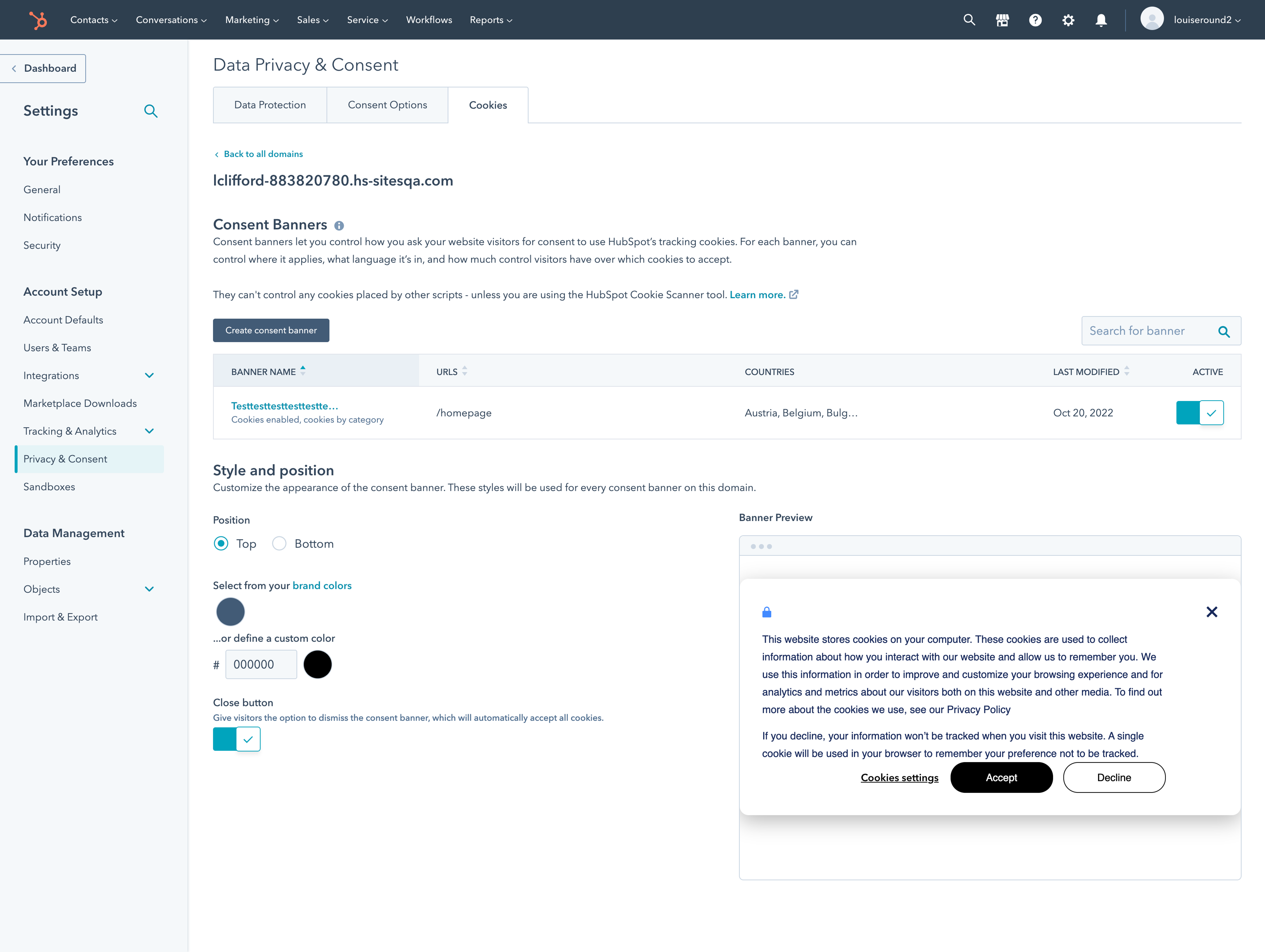
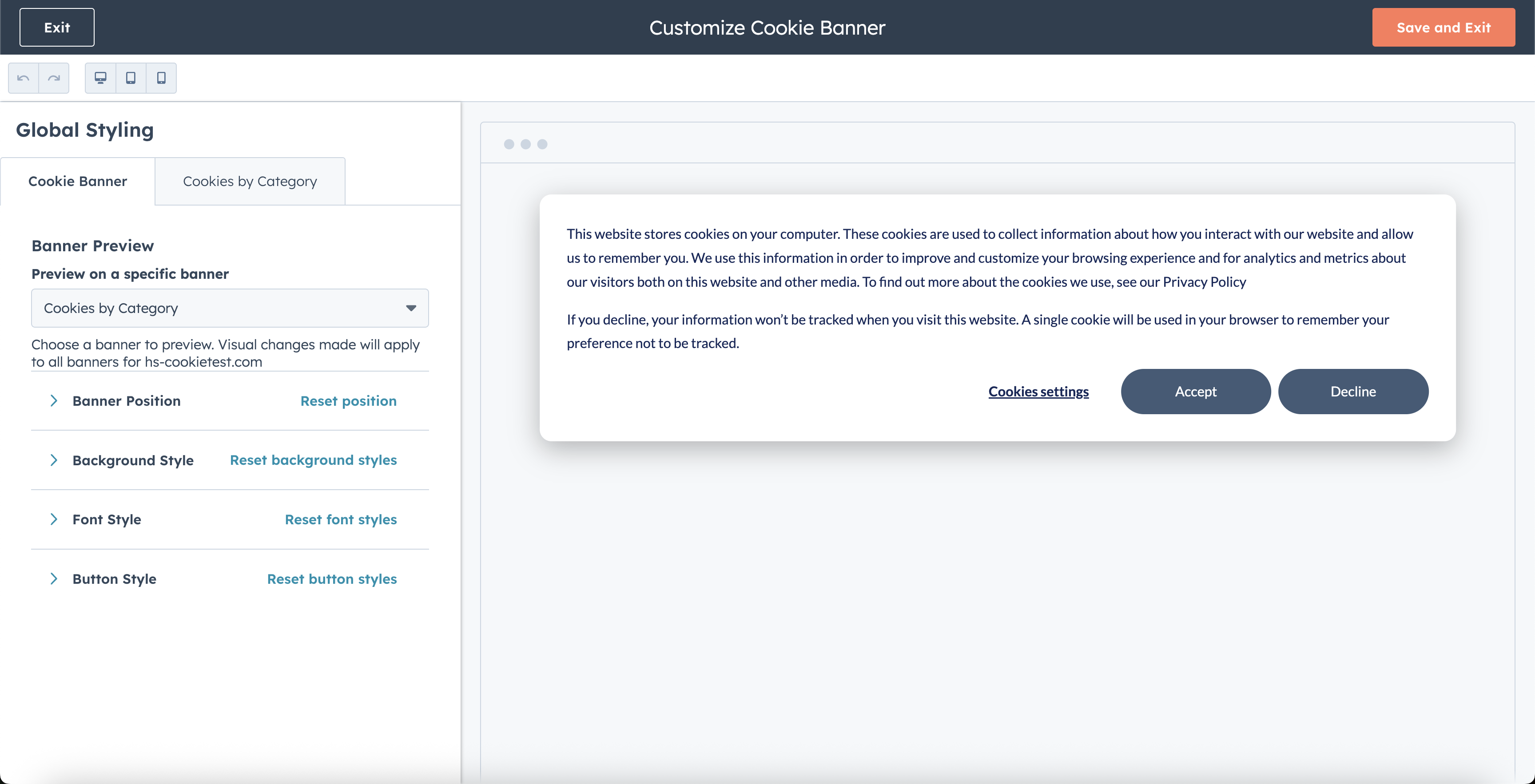
I led a complete redesign of the Cookie Banner creation experience, introducing a flexible customisation editor with live previews, mobile responsiveness, and built-in accessibility. I validated early assumptions through a live “playground” prototype, conducted hands-on user testing, and used empathy sessions to reframe our team’s approach around real customer needs. I also drove collaboration across product, engineering, and accessibility experts to ensure every banner met WCAG standards.
📈 What was the result?
Take a look at the types of cookie banners customers can now create - fully customisable and designed to align seamlessly with their company branding 👇